Plan your visit to Mozart's Birthplace
The house where Mozart was born
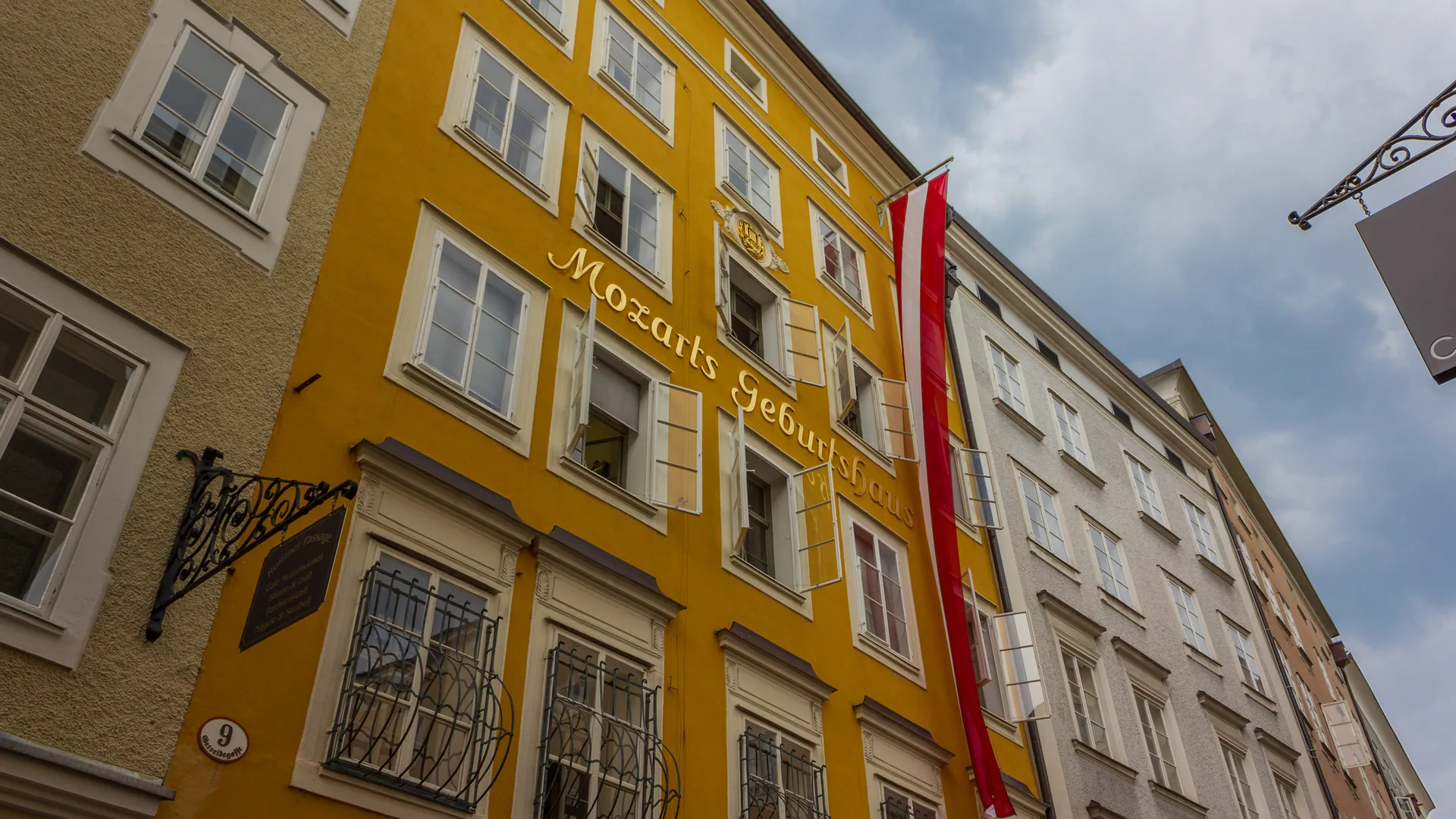
There's a particular thrill in standing on Getreidegasse and looking up at the tall, narrow, butter-yellow house at number 9 — because this is genuinely the place. Wolfgang Amadeus Mozart was born here on 27 January 1756, on the third floor of what was then the Hagenauer Haus, and his family lived in the apartment for years, until 1773. His father Leopold, mother Anna Maria and gifted older sister Maria Anna — 'Nannerl' — shared these rooms while the young prodigy grew up surrounded by music. The building has been a museum since 1880, and today it's run by the International Mozarteum Foundation, spread over three floors that trace his childhood, his instruments, his friendships and his early fascination with opera. Even hemmed in by the shops of one of Europe's prettiest shopping streets, the facade is unmistakable, and it remains the single most-visited sight in Salzburg.
Booking the museum vs a guided experience
Let's be straight about this, because it changes how you should plan. The birthplace museum sells an inexpensive standard entry ticket directly, on the door at Getreidegasse 9, and it's rarely sold out — so you do not need us, or any third party, to get inside. We don't sell that admission ticket, and we won't dress one up. What we help you plan and book here is the more rounded way to experience Mozart's Salzburg: a top-rated guided walking tour through the Old Town that passes and contextualises his birthplace, weaves in the UNESCO-listed baroque centre and the Mirabell Gardens, and — separately — the city's celebrated Mozart concerts in halls where he actually played. If all you want is to step inside the house, buy the museum's own ticket at the door and keep this page as your planning guide. If you want the story, the walk and the music around it, that's exactly what the experiences below are for.
What you'll see inside the museum
The three floors are arranged to move you through Mozart's early world. The reconstructed Mozart family apartment gives a sense of the cramped, music-filled rooms the family shared, dressed with period furniture. Among the treasures are Mozart's own childhood violin — made by the Salzburg court luthier Andreas Ferdinand Mayr — and Nannerl's keyboard, alongside a clavichord on which Mozart is said to have composed The Magic Flute and other historical fortepianos that show how keyboard instruments evolved in his lifetime. You'll also find the famous Mozart family portrait, handwritten letters between family members, and early musical scores in the composer's own hand. One floor leans into his lifelong passion for opera. It's an intimate museum rather than a sprawling one — most visitors spend around an hour to ninety minutes — but the density of genuine objects, in the very rooms where he was born, is what makes it special.
Mozart's Salzburg beyond the birthplace
Salzburg wears its most famous son everywhere, and the birthplace is really the anchor for a wider Mozart itinerary. A short walk away, the whole Old Town is a UNESCO World Heritage Site, its baroque squares, churches and lanes remarkably preserved. Across the Salzach river lie the Mirabell Palace and Gardens — themselves part of the UNESCO listing and instantly familiar from The Sound of Music — where the Marble Hall (Marmorsaal) is one of the very rooms in which the young Mozart and his family performed. This is why a guided Old Town, Mozart and Mirabell Gardens walk is such a natural companion to the museum: it stitches the sights, the streets and the stories into a couple of well-paced hours, with a guide to explain what you're looking at.
The Mozart concerts — and whether they're worth it
For many visitors the highlight of a Mozart-themed trip isn't a museum at all but hearing his music played live in the settings that shaped it. Salzburg has a long-running culture of intimate chamber and orchestral concerts: the Salzburg Palace Concerts in Mirabell's historic Marble Hall, and dinner-and-concert evenings at the Hohensalzburg fortress high above the city, are the best-known. These are small, atmospheric, tourist-friendly performances rather than the grand Salzburg Festival, and for anyone who has spent the day among Mozart's letters and instruments, hearing his work performed where he once did lands differently than a recording ever could. Seats are limited and popular dates sell out, so if a concert appeals, it's worth booking your evening before you arrive.
Mozart's Birthplace opening hours
| Daily (standard) | Open every day, roughly 9:00 to 17:30, with last admission about 30 minutes before closing |
|---|---|
| July & August | Extended summer hours, typically 8:30 to 19:00, with last admission around 18:30 |
| Tickets | A standard adult ticket is inexpensive and bought on the door; a combined ticket with the Mozart Residence is available if you visit both within a set window |
| Access note | The historic house is not wheelchair accessible for architectural reasons; the Mozart Residence across the river is the accessible alternative |
These are the museum's own opening hours for the house at Getreidegasse 9, not ours — we don't run the site or sell its entry ticket. The International Mozarteum Foundation adjusts hours seasonally and around special dates, so treat these as a guide and reconfirm on the museum's own channels before you go. The walking tours and concerts we list here run to their own separate schedules, which you'll see when you book.
Frequently asked questions
Do I need a ticket for the birthplace museum, and can I buy it here?
You do need a ticket to go inside, but it's an inexpensive standard admission you buy directly at the museum door on Getreidegasse 9 — it rarely sells out, so there's no need to book ahead or pay a third party. We don't sell that entry ticket, and we'd rather say so plainly. What you'll find on this page are guided walking tours that take in Mozart's Salzburg and the city's Mozart concerts, all booked through GetYourGuide.
What's the difference between the Birthplace and the Residence (Wohnhaus)?
They're two separate Mozart museums in Salzburg. The Birthplace, at Getreidegasse 9 in the Old Town, is the yellow house where Mozart was born in 1756 and where the family lived until 1773 — it's strongest on his childhood, his early instruments and personal items. The Mozart Residence (Wohnhaus), across the river on Makartplatz, is where the family lived from 1773 to 1787; it's more spacious, tends to be quieter, and is wheelchair accessible, where the historic Birthplace is not. A combined ticket lets you see both within a set window if you want the full picture.
Are Mozart concerts in Salzburg worth it?
For most Mozart-minded visitors, yes. The Salzburg Palace Concerts in the Marble Hall of Mirabell Palace — a room where Mozart himself performed — and the dinner concerts at Hohensalzburg fortress are intimate, atmospheric evenings of his music, quite different from the grand summer Salzburg Festival. Hearing his work played live in the city that shaped it is, for many people, the most memorable part of the trip. Seats are limited and popular dates sell out, so booking ahead is wise.
Was Mozart really born in this house?
Yes. Wolfgang Amadeus Mozart was born on 27 January 1756 on the third floor of the house at Getreidegasse 9, then known as the Hagenauer Haus. His family lived there for years, until 1773, and the building has been open as a Mozart museum since 1880. It's the genuine article, in the heart of Salzburg's Old Town, not a reconstruction elsewhere.
What can I see inside Mozart's Birthplace?
Over three floors you'll find Mozart's childhood violin, made by Salzburg luthier Andreas Ferdinand Mayr, a clavichord associated with the composition of The Magic Flute, historical fortepianos, the well-known Mozart family portrait, handwritten family letters and early scores, and a reconstruction of the family apartment with period furnishings. One floor focuses on his fascination with opera. It's an intimate collection of authentic objects in the rooms where he grew up.
How long does a visit to the museum take?
Most visitors spend around an hour to ninety minutes inside. It's a compact, densely packed museum rather than a huge one, so you can take it in comfortably in a morning or afternoon and still have time for a guided Old Town walk or an evening concert. If you're combining it with the Mozart Residence across the river, allow a couple of hours in total plus the short walk between the two.
What are the opening hours?
The museum is generally open daily, roughly 9:00 to 17:30, with last admission about half an hour before closing. In July and August the hours usually extend to around 8:30 to 19:00. These are the museum's own hours and can change seasonally or around special dates, so reconfirm on the International Mozarteum Foundation's channels before you visit.
Where exactly is Mozart's Birthplace?
It's at Getreidegasse 9, on Salzburg's most famous shopping street in the heart of the UNESCO-listed Old Town. Look for the tall, bright-yellow building with 'Mozarts Geburtshaus' lettering above the shopfronts — it's one of the most photographed facades in the city and hard to miss once you're on Getreidegasse.
Is the museum wheelchair accessible?
Unfortunately not — the historic house at Getreidegasse 9 cannot be made wheelchair accessible for architectural reasons. If accessibility is important, the Mozart Residence (Wohnhaus) on Makartplatz, the family's later home, is wheelchair accessible and covers much of the same Mozart story with a strong collection of instruments.
What does the Old Town, Mozart and Mirabell Gardens walking tour cover?
It's a guided walk through Salzburg's UNESCO-listed baroque Old Town that ties the Mozart sights together — passing and contextualising his birthplace on Getreidegasse — and crosses to the Mirabell Palace and Gardens, themselves part of the World Heritage listing and famous from The Sound of Music. A guide brings the streets, squares and Mozart connections to life in a couple of well-paced hours. Exact route and inclusions are shown on the listing when you book.
Can I combine the birthplace with the Mirabell Gardens and Old Town in one day?
Easily. The birthplace, the Old Town and the Mirabell Gardens are all within a comfortable walk of one another, on opposite banks of the Salzach river. Many visitors see the museum on their own in the morning, join a guided Old Town and Mirabell walk, and cap the day with an evening Mozart concert — a full, satisfying day of Mozart's Salzburg without ever needing a car.
Is Salzburg's Old Town a UNESCO World Heritage Site?
Yes. The historic centre of Salzburg is a UNESCO World Heritage Site, recognised for its exceptionally preserved baroque townscape. Mozart's Birthplace sits right in the middle of it, and the Mirabell Palace and Gardens across the river are part of the same listing — which is part of why a guided Old Town walk pairs so naturally with a museum visit.
Who runs the museum, and are you affiliated with it?
The birthplace museum is run by the International Mozarteum Foundation (Stiftung Mozarteum). We are not affiliated with the museum or the Mozarteum and we're not the official ticket seller — we're an independent planning and booking guide. The walking tours and concerts we list are booked through GetYourGuide; the museum's own entry ticket is bought directly from the museum.
When is the best time to visit?
The museum is busiest in the middle of the day and through the summer peak, so arriving early or later in the afternoon usually means a calmer visit. Salzburg is at its liveliest in summer, when concert programmes are fullest and the extended museum hours apply, but spring and autumn bring smaller crowds. Whatever the season, book any walking tour or concert ahead for popular dates, even though the museum itself is a walk-up.